
M6 Step Forward · Leader Talks
Economic and Political Development Perspectives on the Balkans
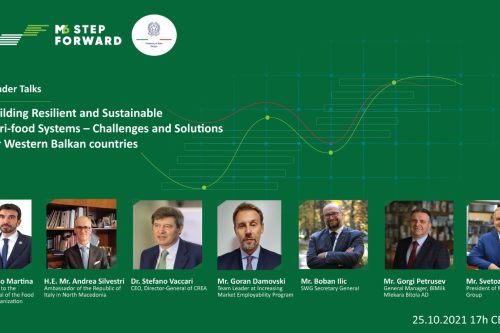
M6 Educational Centre’s “M6 Step Forward” program represents a platform through which prominent economic and political thought leaders discuss and introduce possible solutions to the ongoing challenges facing societies, companies and individuals in North Macedonia and the wider region.
Leader Talks
Speakers
The conference brought together prominent experts, business leaders and policymakers to discuss the economic and political development perspectives of the Western Balkans.
01
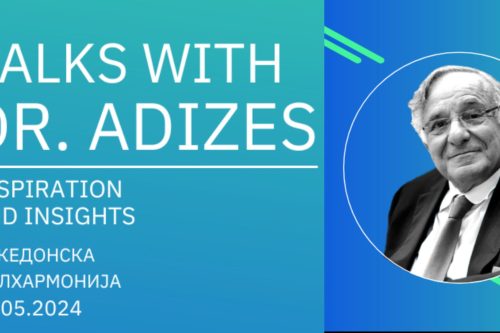
Dr. Ichak Adizes
World-leading management expert and government consultant
02
Mr. Reinhard Priebe
Former Director of the European Commission
03
Mr. Zijad Bećirović, PhD
Director at the International Institute for Middle-East and Balkan Studies (IFIMES)
04
Mr. Goran Štrok
President and owner of Adriatic Luxury Development
05
Mr. Svetozar Janevski
President of M6 Investment Group
06
Mr. Zoran Martinovski
External advisor on Public-Private Partnerships
07
Mr. Zoran Jovanovski
Economic expert
Conference Program
Agenda
17:00 – 17:10
Conference Opening and Welcoming Address
Elena Mladenovska Jelenkovikj
17:10 – 17:30
What Is Keeping Underdeveloped Countries From Developing?
Dr. Ichak Adizes — World-leading management expert and government consultant
17:30 – 17:50
What Are the Perspectives of Global Politics and EU Integration Processes of WB Countries?
Mr. Reinhard Priebe — Former Director of the European Commission
17:50 – 18:10
COVID Diplomacy in the Region: Progressive Change or Cheap Workforce?
Mr. Zijad Bećirović — Director at IFIMES
18:10 – 18:30
Are the Perspectives of WB Economies Developed Through Innovative Strategic Commitment?
Mr. Goran Štrok — President and owner of Adriatic Luxury Development
18:30 – 18:50
The Importance of Emphasizing the Competitive Advantages of the Countries of the Region
Mr. Svetozar Janevski — President of M6 Investment Group
18:50 – 18:55
Short Break
18:55 – 19:55
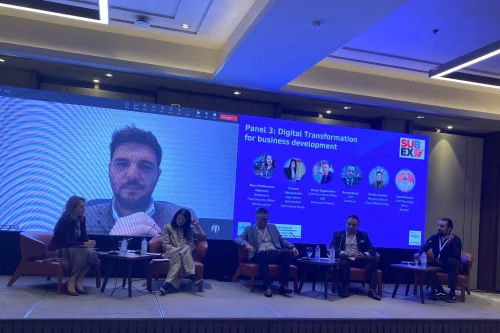
Panel Discussion: What Are the Perspectives for Political and Economic Step Forward?
Mr. Reinhard Priebe, Mr. Svetozar Janevski, Mr. Goran Štrok and Mr. Zijad Bećirović
Moderators: Ida Protuger and Sefer Selimi
19:55 – 20:00
Conference Wrap-Up and Closing Remarks
Conference Summary
Key Insights from the Conference
Following the successful conference, M6 Educational Centre presents the key points shared by the speakers during the “Economic and Political Development Perspectives on the Balkans” Leader Talks conference, together with the main conclusions from the panel discussion.
Dr. Ichak Adizes — Key Points
- Systems contain subsystems, and each subsystem requires different amounts of time to change and adapt.
- A sign that a country’s system is not functioning efficiently is the number of people leaving the country. Comparing how many people want to come versus leave can provide an indication of how effective the system is.
- Macedonia does not need to industrialize itself because it does not have a competitive advantage in this area.
- Countries should identify their competitive advantages and create added value from them, including through hospitality, nature and green tourism.
- The manifestation of being underdeveloped is inferior economic conditions. A common response is to provide economic aid to stimulate activity.
- Moving a country from “underdeveloped” to “developing” requires dedicated and focused energy. Anything that wastes this energy undermines the country’s ability to develop.
- Four factors that waste energy necessary for sustainable development are lack of social integration, lack of entrepreneurial spirit, lack of law and order, and certain institutional and religious structures.
- Development support should focus on overcoming social, religious and ethnic conflicts and building tolerance, mutual trust and respect.
- Education should encourage long-term thinking, risk-taking, entrepreneurial spirit and practical skills.
- A well-regulated and properly supported judiciary is necessary to reduce corruption and strengthen the rule of law.
Mr. Zijad Bećirović — Key Points
- Leaders have the task of integrating systems, building and maintaining healthy systems, and producing results in the most efficient way.
- Countries are facing brain drain while companies are facing workforce shortages. Countries must be prepared to address these challenges and develop more open approaches to workforce migration.
- Regional perspectives lie in cooperation and interconnection, which require mutual trust and respect to achieve peace, stability and synergy.
- A joint approach among Western Balkan countries could generate greater strength and new opportunities.
- The rule of law must include a strong fight against crime and corruption, supported by visionary leadership.
Mr. Reinhard Priebe — Key Points
- The EU is a club that countries join voluntarily, but membership comes with clear conditions.
- The European integration process requires commitment to reforms and meeting established standards.
- Implementing reforms before negotiations begin can accelerate the process of closing negotiation chapters.
- Western Balkan countries have a future within the EU, and the accession process is relevant to both the region and the European Union.
- Although the Western Balkans still face political and economic challenges, progress is possible through continued reforms and stronger efforts against corruption.
Mr. Goran Štrok — Key Points
- Businesses and countries need to focus on their competitive advantages.
- Western Balkan countries have significant competitive advantages in tourism and natural resources.
- Macedonia’s natural environment provides opportunities for investment in luxury and sustainable tourism.
- Agriculture and organic production represent additional opportunities for development.
- Innovative solutions and diversified tourism offers are needed, including opportunities for cross-country tourism that can promote the entire region.
- The region has many opportunities, but countries need the capacity and vision to identify and use them.
Mr. Svetozar Janevski — Key Points
- The region has experienced significant disruption of its systems over the past two decades, resulting in weakened standards and institutions.
- Macedonia is facing immigration and brain drain. Governments should study the real reasons behind migration and identify what young citizens need to build sustainable lives in the country.
- Greater social cohesion is needed, supported by international experience and cooperation.
- Corruption remains deeply embedded in society and institutional structures must become more accountable.
- Education reform needs to go beyond surface-level changes and focus on building a truly accountable system.
- The region needs to move away from internal divisions and focus on shared interests such as EU integration, NATO, development, citizens’ well-being and economic growth.
- The economy needs to create added value rather than relying primarily on cheap labour.
- Export-led growth should incorporate more domestic components and strengthen the entire value chain.
- Agriculture represents an important opportunity, but the sector needs modernization and greater productivity.
- Renewable energy should become a strategic priority, alongside reducing bureaucracy and encouraging private investment.
Panel Discussion
Key Takeaways
Perspectives for Political and Economic Step Forward
- The Western Balkans still have significant work to do on their path toward EU integration.
- Immediate implementation of standards is necessary to create competitive products and services for foreign markets.
- Foreign direct investment can support the economy, but incentives should not be based primarily on cheap labour and subsidies.
- Domestic investors should also be encouraged and supported in investing and expanding.
- Using domestic suppliers throughout the value chain is essential for faster economic development and creating higher-value products and services.
- Society needs to evolve and become more capable of adapting to changes in the global environment.